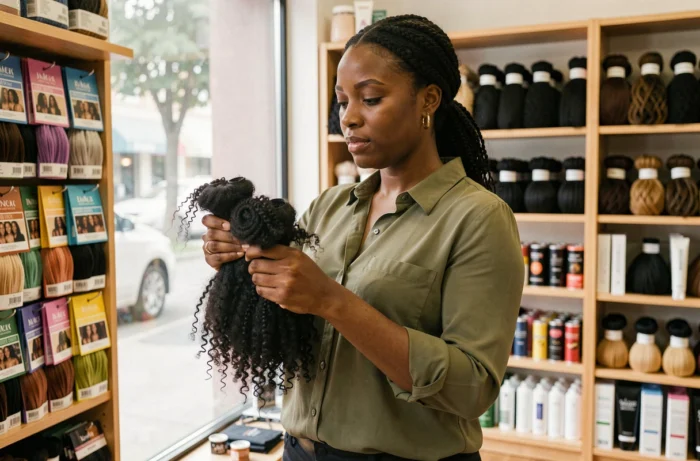
Faced with the proliferation of physical and online stores offering afro hair extensions, distinguishing a reliable shop from a dubious seller relies on verifiable criteria. Fiber composition, lot traceability, storage conditions, regulatory compliance: each parameter directly affects scalp comfort and hairstyle durability. This article reviews the concrete indicators that separate a quality brand from a risky point of sale.
Contaminants in afro hair extensions: what recent tests reveal
The misconception that only synthetic extensions pose a problem has been challenged by recent analyses. An investigation reported in August 2026 by Consumer Reports highlighted that human, plant, and synthetic hair extensions all contained volatile organic compounds (VOCs). Some samples also showed heavy metals such as lead, cadmium, or arsenic.
This finding changes the perspective in stores. The label “human hair” or “plant fiber” does not guarantee the absence of chemical residues. A reputable afro hair extension shop should be able to provide information about the origin, treatment applied to the fibers, and the actual composition of the product, not just the generic category.
The signs to look for in-store to assess the reliability of a point of sale overlap with the criteria detailed by edayspa caisse on SOS Beauté in a dedicated guide on this subject.
| Type of extension | Detected contaminants (Consumer Reports survey, August 2026) | Main risk |
|---|---|---|
| Synthetic | VOCs, manufacturing residues | Scalp irritation, skin reaction |
| Human hair | VOCs, heavy metals (lead, cadmium, arsenic) | Prolonged exposure through contact |
| Plant fiber | VOCs (variable levels depending on batches) | False sense of safety related to “natural” marketing |
This table shows that no category is free from risks. The difference lies in the pre-treatment of the fibers and the supplier’s rigor, two elements that a good store can document.
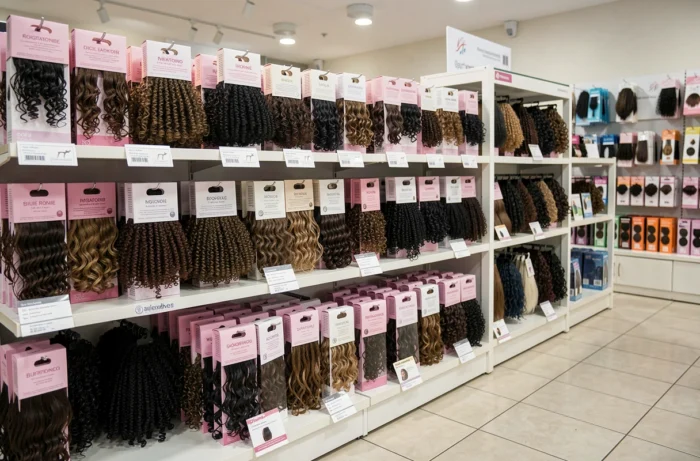
Fiber pre-treatment: the criterion that serious shops highlight
The pre-treatment of fibers before sale is a quality indicator rarely displayed by low-end resellers. This process aims to eliminate chemical residues from the manufacturing or treatment of collected human hair.
A reliable afro hair extension shop explicitly mentions the washing, disinfection, or conditioning steps applied to the batches. The absence of information on pre-treatment is a warning sign, regardless of the displayed price.
What you can check in-store
- The presence of sealed packaging with lot number, origin, and treatment applied. An open or unlabeled bag indicates untraceable sourcing.
- The smell of the extensions upon opening: a strong chemical odor indicates insufficient rinsing of manufacturing residues, often correlated with scalp irritations.
- The texture to the touch: excessively shiny or stiff fibers suggest a heavy silicone coating, which masks the actual quality of the underlying fiber.
Scalp reactions attributed to a “synthetic allergy” are often linked to manufacturing residues and installation tension, not to the nature of the fiber itself. A shop that advises on home pre-treatment (soaking in apple cider vinegar, prolonged rinsing) demonstrates real knowledge of the product.
Regulatory compliance of afro hair extensions in Europe
In Europe, hair products sold in stores fall under cosmetic law, which entails obligations regarding ingredients, labeling, and claims. A compliant shop displays the mandatory legal mentions on each product: INCI list when applicable, country of manufacture, contact details of the responsible importer or distributor.
Shops that sell extensions without any regulatory information expose themselves to inspections, but more importantly, they deprive customers of any possibility of verification. A package without legal mention means a product that does not comply with the European market.
Misleading claims to watch out for
Some shops use terms like “100% natural,” “organic,” or “hypoallergenic” without regulatory basis. Under European cosmetic law, these claims must be substantiated by evidence. A seller who uses them without associated documentation lacks rigor, or worse, deliberately misleads.
The mention “Remy hair” (cuticles aligned in the same direction) also deserves caution. This designation is not regulated by an official standard. Only suppliers who can prove the traceability of the lot, from collection to shelf display, offer a real guarantee on this characteristic.
Online or in-store afro hair extension shop: reliability gaps
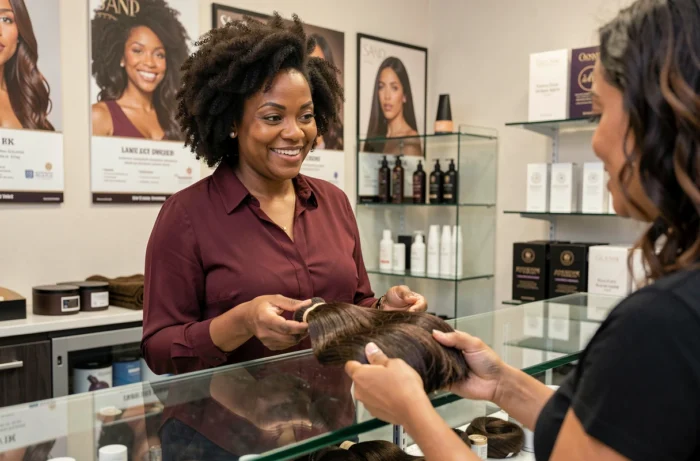
Purchasing in a physical store allows you to check the texture, smell, and packaging before payment. Online, these checks disappear. Customer reviews on independent platforms remain the only reliable filter to evaluate a store remotely.
Several online brands accumulate recurring complaints on platforms like Trustpilot or Complaintsboard: extensions received different from the photo, tangled fibers from the first wash, lack of response from customer service. In contrast, specialized physical stores offer an often underestimated advantage: personalized advice on the type of extension suitable for each hairstyle (braids, locks, twists, twists).
- In-store: ability to touch, smell, and compare batches. The seller can explain the origin and treatment of the fibers.
- Online: check the return policy, the presence of reviews on third-party sites (not just on the merchant site), and the existence of a reachable customer service number.
- In both cases: a reliable afro hair extension shop offers several price ranges for the same category, a sign of diversified sourcing and not a single lot repackaged under different brands.
The diversity of ranges and transparency about composition remain the two most reliable markers, whether the purchase is made online or in-store. A shop that refuses to answer questions about the origin or treatment of the fibers does not deserve the trust of its customers, regardless of its price.