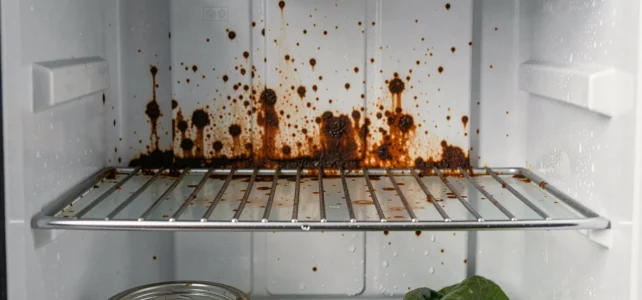
An orange stain on the inner wall of the refrigerator, a chip of paint on a metal shelf, a brownish halo near the door seal: rust in a fridge often settles in quietly. It is not just an aesthetic issue. Corrosion attacks the protective surface of materials, creates porous areas that are difficult to clean, and can ultimately compromise the appliance’s sealing. Understanding this mechanism allows for action before the situation becomes irreversible.
Corrosion and food contact: what happens on damaged surfaces
The interior coating of a refrigerator (often a layer of paint or plastic applied to metal) acts as a barrier. As long as this barrier remains intact, the metal does not react with ambient moisture. As soon as a scratch or impact breaches it, water and oxygen come into direct contact with the underlying steel.
The reaction produces iron oxide, in other words, rust. This granular deposit creates microcracks where bacteria survive regular cleaning. A simple wipe with a sponge is no longer sufficient: the irregular surface retains organic residues and moisture, two ideal conditions for microbial proliferation.
A regulatory notice relayed by FNB News in August 2026 regarding cutting tools in contact with food confirms this point: corroded surfaces are significantly more difficult to decontaminate than smooth surfaces. The same principle applies inside a fridge where unpackaged food, fresh vegetables, or uncovered leftovers are placed. It is better to know the dangers of rust in a fridge before ignoring a simple stain on a shelf.

Humidity, salt, and condensation: the causes of rust in a refrigerator
Have you ever noticed that some fridges rust faster than others in the same kitchen? Several factors accelerate corrosion, and they often combine.
Permanent internal humidity
A refrigerator operates in a closed circuit with cooling and defrosting cycles. Each time the door is opened, warm, humid air enters. This humidity condenses on the cold walls and then drips to the low points. If a chip of paint exposes the metal in that area, rust begins within a few weeks.
Coastal or saline environment
A technical article published by Bognor Appliance Repair in August 2026 describes a lesser-known phenomenon: salt deposits form a conductive film that retains moisture on metal surfaces. By the sea, appliances (including refrigerators) undergo accelerated corrosion. The recommendation: ventilate the room and regularly wipe exposed surfaces with a damp cloth.
Spilled products and acidic foods
Tomato juice, vinegar, or a leftover sauce that stagnates on a shelf attacks the protective coating. Acidity accelerates the degradation of the paint layer and exposes the metal faster than simple condensation.
- Repeated condensation on an already scratched or chipped surface
- Exposure to salt in coastal areas, which acts as a catalyst for corrosion
- Prolonged contact with acidic foods or uncleaned spilled liquids
- Cleaning with abrasive products that scratch the interior coating
Health risks: when rust contaminates food
Iron oxide itself is not considered highly toxic. Iron is a trace element that the body uses in small amounts. The response from the Guichet du Savoir, based on advice from the Cité des sciences, specifies that the presence of rust in water does not constitute direct toxicity.
The real problem lies elsewhere. Rust alters the texture of the surface. It makes it porous, rough, and impossible to disinfect properly. Pathogenic bacteria (salmonella, listeria) can lodge there and contaminate nearby food.
A fridge with corroded walls or shelves loses its primary function: to keep food in a clean and cold environment. Even if you clean regularly, the microcracks created by corrosion escape surface cleaning. The risk increases over time because rust spreads beneath the remaining paint layer without being visible.
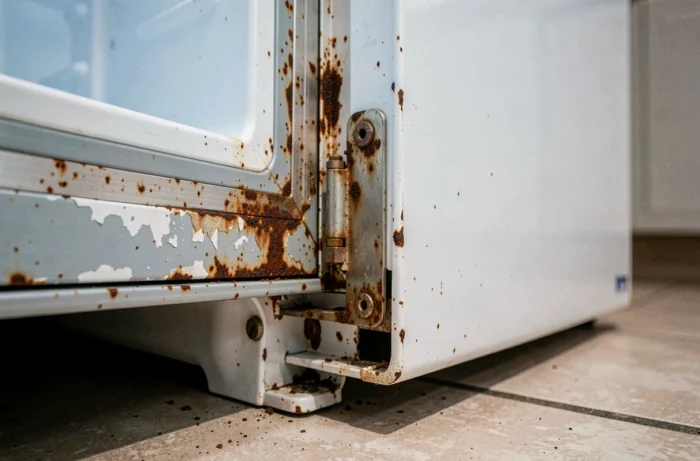
Fridge lifespan: corrosion as a sign of advanced wear
Rust does not only affect the visible interior. It can reach structural components: hinges, door frame, condenser at the back. When corrosion attacks the door frame, the magnetic seal no longer fits properly. Warm air enters, the compressor runs more, and energy consumption rises.
This vicious circle significantly shortens the lifespan of the appliance. A compressor that runs continuously to compensate for a sealing leak wears out much faster than a compressor operating in normal cycles.
Since July 31, 2026, the European directive on the repair of goods applies. It can extend the lifespan of a fridge affected by corrosion when the failure remains repairable outside of warranty. In practice, this means that a rusty door seal or shelf can be replaced rather than discarding the entire appliance. Repairing a corroded fridge remains viable as long as the supporting structure is not affected.
Preventing and treating rust in a fridge: concrete actions
Acting early makes all the difference. Here are the most effective interventions depending on the stage of corrosion:
- Inspect shelves, bins, and walls every three months for chips of paint or emerging orange stains
- Immediately wipe up any spilled liquid, especially acidic foods (citrus juices, tomato sauces, vinegar)
- Clean the interior with a soft cloth and diluted baking soda, never with abrasive sponges or concentrated chlorine products
- Apply a layer of food-grade varnish on small chipped areas to stop the progression of rust
- In coastal areas, ventilate the kitchen and wipe the outer surfaces of the fridge with a slightly damp cloth to remove salt deposits
A rust spot treated in a few minutes avoids a replacement of the appliance a few years later. The key remains vigilance: a quick inspection during the monthly cleaning is enough to spot the first signs. If corrosion has already breached the metal wall or deformed the door frame, replacing the part (or the appliance) becomes the only reliable option to ensure safe food storage.