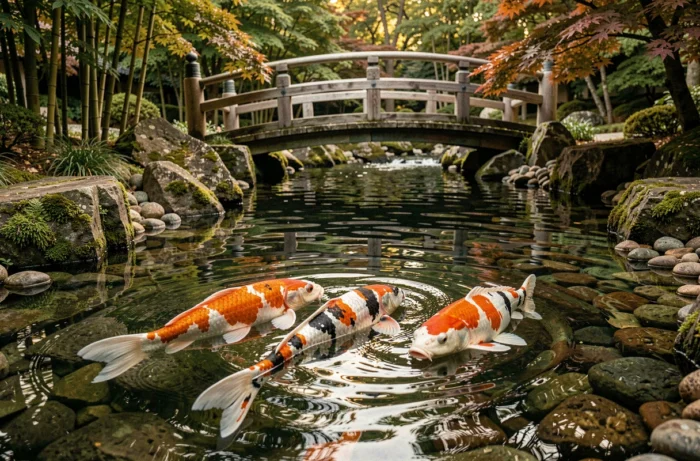
A Japanese koi carp of 15 cm and another of 60 cm have almost nothing in common, neither in appearance nor in price. The difference lies in what has happened between these two sizes: selection, genetics, feeding, and especially the perspective of a Japanese breeder on each fish. Understanding these steps helps explain why prices vary so much and, above all, what you are really paying for when you decide to invest in a quality Japanese koi carp.
Koi Auctions in Europe: Prices Often Very Different from Retail Rates
Have you ever compared the price of the same fish between an online store and an auction? The gap can be surprising. European auctions of reputable lines, such as those from breeder Dainichi, regularly offer nisai (two-year-old koi) measuring 51 to 68 cm with bids ranging from a few dozen to several hundred euros. Lines with selection names like “Mr.Big” or “BlackMonroe” sometimes start below the 100 euro mark.
In a specialized store, the same type of fish, with a comparable pedigree, will be listed at a much higher price. The gap between auction and retail prices often exceeds double. This discrepancy is explained by import fees, the retailer’s margin, health quarantine, and the cost of maintenance in storage ponds.
If you are considering buying a Japanese koi carp, online auctions are a concrete option to access good lines without reaching the prices charged in stores. The trade-off: you need to know how to evaluate a fish from a photo or video and manage the transport yourself.
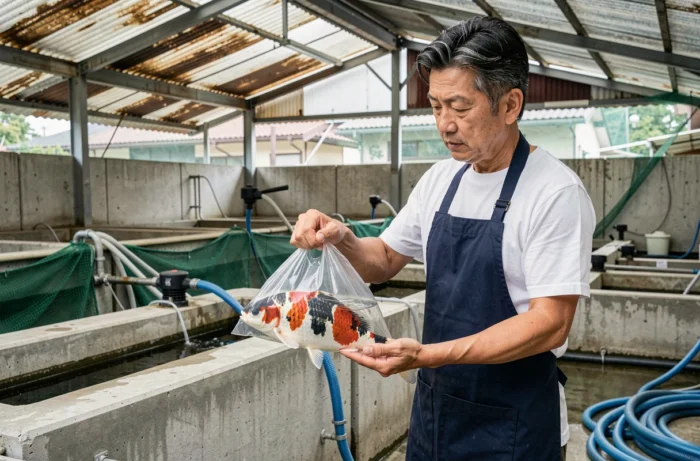
Japanese Koi Carp: How Size and Age Affect Price
The price of a koi carp is not read on a fixed grid. It progresses in steps related to age, size, and the selection made by the breeder at each growth stage.
Tosai, Nisai, Sansai: Three Age Classes, Three Budgets
A tosai is a one-year-old koi, typically around 15 cm. This is the entry-level format. A quality Japanese tosai costs between 50 and 150 euros. At this stage, the potential of the fish remains uncertain: colors, body shape, and patterns will still evolve.
A nisai (two years) often measures between 30 and 45 cm. The breeder has already sorted the original lot several times, keeping only a fraction of the fish. A well-selected nisai trades between 200 and 800 euros, sometimes exceeding 1,000 euros for a specimen with stable patterns and clear colors.
The sansai (three years) frequently reaches 50 to 60 cm. At this age, the body shape is almost definitive. Beautifully sourced sansai trade between 1,000 and 5,000 euros, or even more.
Why Does a 60 cm Koi Cost Much More Than Four Tosai?
Each additional year involves quality food, space in the breeding pond, and successive culling. From an initial batch of several thousand tosai, only a few dozen reach the sansai stage with a marketable quality level. This drastic sorting is directly reflected in the price.
Japanese Lineage or European Breeding: A Choice That Affects the Budget
Not all koi sold in France come from Japan. European farms also produce koi carp, often at significantly lower prices. Why this difference?
- Japanese breeders select based on very strict aesthetic criteria, sometimes over several generations of the same line. The strain names (Kohaku, Sanke, Showa) refer to varieties whose genetics have been refined for decades.
- A standard 60 cm European koi typically sells for between 300 and 500 euros, while a Japanese specimen of the same size, from a documented lineage, usually starts around 800 euros.
- Japanese genetics offers a superior potential for color and shape development, but this potential only fully reveals itself in a pond with suitable conditions (water volume, filtration, feeding).
A European koi can perfectly suit a garden pond without aspirations for competition. However, if you are looking for a fish whose colors will intensify over the years, the Japanese lineage remains the reference.
Water Quality and Feeding: The Invisible Cost After Purchase
The purchase price represents only part of the actual budget. A quality Japanese koi placed in a poorly filtered pond or fed with low-quality pellets will never develop its potential. It’s a bit like buying a sports car and running it on bad fuel.
A quality pond for koi carp requires sufficient water volume and effective biological filtration. High-quality pellets, rich in spirulina or carotenoids, promote color development. Their annual cost depends on the number of fish, but it represents a recurring expense that should not be underestimated.
- The quality of the water (nitrite levels, pH, temperature) directly affects the health and longevity of the fish.
- A diet suitable for each season (proteins in summer, lighter food in winter) maintains body shape and colors.
- A koi stressed by an overcrowded or poorly maintained pond will lose its luster, regardless of its lineage.
Before investing in a sansai costing several thousand euros, ensure that your setup is up to par. A tosai from a good lineage in a well-managed pond will often outperform an expensive sansai in a mediocre environment.
The price of a Japanese koi carp reflects years of selection and breeding, but the final quality of the fish depends as much on its new owner as on its breeder. Betting on a young specimen from a serious lineage, while caring for the pond and feeding, remains the most reliable strategy to obtain a koi that appreciates in value over time.