A 72-year-old neighbor who decides not to renew her health card online because the portal has changed its interface, a former craftsman who stops walking after a fall on a poorly maintained sidewalk: senior well-being often hinges on very concrete details. Well-being trends for senior living are evolving, and they concern both the body and the ability to remain autonomous in an increasingly digitized daily life.
Digital Divide and Senior Autonomy: A Blind Spot in Aging Well
There is much talk about adapted physical activity or nutrition, but the loss of administrative autonomy is a rising issue. When health, insurance, or home assistance procedures go through online platforms, not mastering the tool amounts to losing access to one’s own rights.
Several local authorities and associations now offer digital workshops dedicated to seniors, focused on practical cases: making a medical appointment, tracking a reimbursement, reporting a change in situation. The goal is not to turn everyone into digital experts, but to secure everyday actions.
Resources like seniors-magazine.net regularly relay this type of initiative and help identify accessible services by region. What has changed compared to previous years is that digital support is increasingly seen as an essential tool: it falls within the scope of home care.
Therapeutic Gardens in Senior Residences: Beyond the Decor
Therapeutic gardens are gaining ground in nursing homes and senior residences. They are associated with reduced anxiety, increased mobility, and enhanced social interactions among residents. Their integration into facilities is no longer an isolated experiment.
In practical terms, these spaces are designed for people with reduced mobility to move around, sit, and garden at arm’s height. Feedback from establishments that have implemented them also points to an effect on attractiveness: a well-designed therapeutic garden helps recruit staff and reassures families.
The benefits go beyond just a green space. Gardening activities, even light ones, engage fine motor skills, coordination, and procedural memory. For residents who spend a large part of the day indoors, going outside also alters the circadian rhythm, which can improve sleep quality.
Gentle Physical Activities and Social Connections: What Works After 65
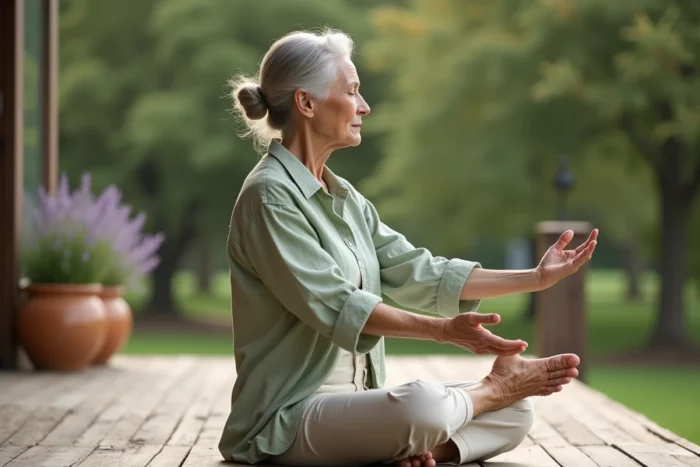
The underlying trend no longer pushes towards performance. The practices that are developing the most among seniors combine movement and human connection: group walking, gentle gymnastics in small groups, aquagym in heated pools. Social connection becomes the main driver of physical activity, not the other way around.
Here are the criteria that make an activity sustainable for a senior audience:
- A fixed schedule and a location close to home, to limit logistical constraints that discourage participation after a few weeks
- A stable group where participants know each other, creating a positive social obligation (one also comes for others)
- Supervision that adapts exercises in real-time according to daily pain or fatigue, without a rigid program
Feedback varies on this point, but several organizations find that the dropout rate decreases when the activity is associated with a convivial moment (shared coffee, open discussion after the session). Sport alone is not enough to retain participants.
Home Care and Local Services: Concrete Developments
Staying at home remains the primary wish of French seniors. Home services are structuring around offerings that go beyond simple cleaning or meal preparation. We are seeing the emergence of services combining assistance with administrative procedures, support for outings, and fall prevention.
Fall prevention, in particular, illustrates the evolution of practices. Rather than simply installing a grab bar in the bathroom, some services now include:
- A home assessment by an occupational therapist, who identifies risk areas room by room
- Balance sessions at home, tailored to the available space and the individual’s capabilities
- Regular follow-up to adjust modifications as mobility evolves
This type of holistic approach reduces emergency room visits and delays entry into facilities. The home becomes a genuine care space, not just a living place.
Mental Well-Being of Seniors: Breaking the Taboo Through Practice
The mental health of older adults remains underdiagnosed. Isolation, grief, and loss of social role after retirement are known risk factors, but the responses offered often boil down to general advice.
What is changing is the emergence of initiatives rooted in daily life. Associations organize thematic support groups (bereavement, caregivers, transition to dependency) that do not carry the “psy” label, which alleviates some of the reluctance. Structured volunteering also acts as a lever for mental health, providing a measurable sense of social usefulness.
Relational and gentle approaches are taking precedence over medicalized protocols for emotional well-being. Local activities (choir, cooking workshop, cultural outings in small groups) produce documented effects on morale, provided they are regular and accessible without complex transportation.
Senior well-being is not just a list of good habits. It is built on concrete responses to specific obstacles: an incomprehensible online form, a dangerous sidewalk, a neighbor who is no longer seen. The trends that matter are those that solve these everyday problems, not those that promise abstract vitality.