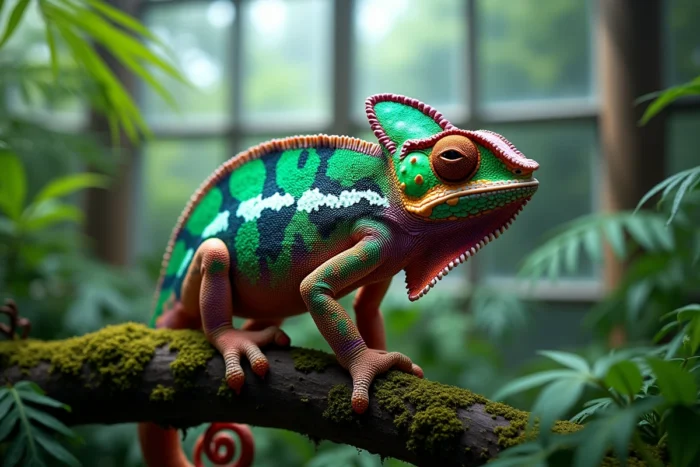
Some gender identities are defined outside the male/female framework. Non-binary identity refers to a person whose gender does not exclusively correspond to male or female. Xenogender goes further: it describes a gender experienced through non-human concepts, such as natural elements, textures, or animals. In both cases, fauna regularly serves as a symbolic support to express these experiences.
Xenogender and Animal Symbolism: A Link That Goes Beyond Metaphor
The term xenogender was coined in online communities to name gender experiences that traditional vocabulary does not cover. A person may describe their gender as related to an animal, not by biological identification, but because the qualities associated with that animal better translate their inner feelings than the categories of male or female.
This mechanism does not fall under totemism in the anthropological sense. It functions as a linguistic and emotional tool. The chosen animal becomes a poetic mediator, a way to make communicable a gender experience that is otherwise difficult to verbalize.
Non-binary creators and performers explicitly mobilize these figures in recent works, where the animal register serves as a bridge between personal narrative and gender identity. The performance of Orfeo Aurora Lili, centered on non-binary and trans identities related to the Asian continent, illustrates this type of artistic approach where the animal functions as a vector of identity expression.
To delve deeper into this theme, xenogender animals on Starlight Infos detail the most common associations in Francophone communities.
Animals Associated with Non-Binary Identity: Which Species and Why
Several species frequently come up in community discussions and awareness campaigns. The choice does not rely on a single convention: it mixes the real biological characteristics of the animal with symbolic projection.
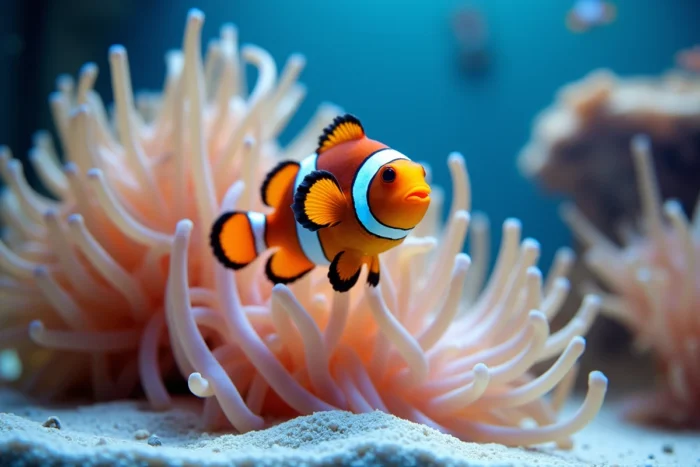
- The clownfish remains the most cited symbol. In nature, this species practices sequential hermaphroditism: an individual is born male and can become female depending on the group’s dynamics. This sexual fluidity makes it a spontaneous emblem for people whose gender does not settle into a stable category.
- Land snails, often simultaneous hermaphrodites, possess both male and female reproductive organs. Their association with non-binariness is based on this permanent biological duality, perceived as a reflection of existence outside the binary.
- The gynandromorphic butterfly, literally half male and half female visually, strikes with its appearance. This extremely rare phenomenon has been documented in some insects, crustaceans, and birds. It represents for some non-binary individuals the visible coexistence of distinct gender traits in the same body.
- Mushrooms (although not animals in the strict sense) appear in the xenogender register. Some species possess thousands of distinct sexual types, placing them radically outside any binary logic. Xenogender individuals identify with them to express a gender perceived as foreign to human categories.
These associations do not claim that animals “are” non-binary. Gender, as humans experience it, remains a social and psychological concept unique to our species. The observable sexual diversity in nature serves as a symbolic support, not biological proof.
Non-Binary Gender and Nature: An Argument for Institutional Awareness
The use of fauna to discuss gender diversity has left community forums. Conservation organizations and public institutions now mobilize animal sexual diversity in awareness campaigns about gender identities. The stated goal is to show that the strict male/female binary does not describe all living beings, and that human identities that diverge from it find echoes in nature.
This type of approach goes beyond simple community symbolism: it anchors the conversation about gender in documented biological facts.
This approach has a limitation to keep in mind. The biological sex of an animal (determined by its chromosomes, gonads, hormones) and the gender of a human person (psychological and social experience) do not operate on the same register. Saying that a clownfish “changes sex” and that a non-binary person experiences their gender outside of male/female describes two distinct realities. The analogy remains symbolic, never equivalent.
Categories of Animal Xenogenres: Beyond a Single Species
Xenogender is not limited to choosing a totem animal. Several subcategories structure these identities in online communities.
Faunogenre refers to a gender defined by a felt connection with an animal or a group of animals. A faunogenre person may describe their gender as “wolf,” not because they believe they are a wolf, but because the qualities they associate with the wolf (independence, pack, territory) better translate their gender experience than any other term.
Other xenogenres draw from nature without targeting a specific animal: gender felt as linked to an ecosystem, a weather phenomenon, a season. The animal then becomes just one component of a broader identity landscape. These categories remain open and evolving. They are created as the expression needs of the individuals concerned arise, without a centralized authority validating or rejecting them.
The common thread among all these identifications remains the use of non-human references to name a gender experience that the terms male, female, or even non-binary are insufficient to describe. The animal, in this context, functions less as a fixed symbol than as a living vocabulary, adapted by each person to their own reality.