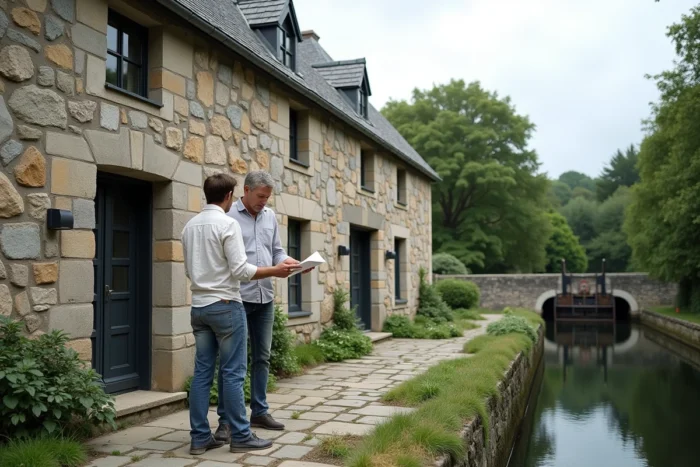
On the Nantes to Brest canal, between Châteaulin and Carhaix, a handful of lock keeper houses are waiting for a buyer. These stone buildings, often vacant since the automation of the locks, are not traded like a classic property. For a tourism project developer, the first question to address is not the price per square meter, but the legal framework and the viability of seasonal operations on a public domain site.
Lock Keeper House in Finistère: An Unconventional Property That Imposes Its Own Timeline
You do not become the owner of a lock keeper house. These buildings belong to the regional public domain, and access is granted through a temporary occupation agreement issued by the Brittany Region or the relevant department. The duration, obligations for heritage enhancement, and conditions for restitution are specified in this document.
In practice, the project developer responds to a call for projects published by the local authority. The application must detail the proposed activity, financing plan, work schedule, and alignment with the local tourism strategy. Communications are conducted in writing, to ensure fairness among candidates, and no individual meetings are typically granted during the application phase.
This administrative framework deters some investors used to the free market. However, it attracts those looking for a lock keeper house for sale in Finistère with a moderate entry ticket, as the occupation fee remains well below a typical commercial rent for a character building by the canal.
Network of Bike and Waterway Routes: The Network Effect That Changes the Game

The Brittany Region no longer enhances lock keeper houses on a piecemeal basis. The current logic aims for a coherent network of tourist stops along the canals, integrated with greenways and cycling routes. For Finistère, this means that each assigned site benefits from the traffic generated by the entire network.
A project developer opening a guesthouse or café-stop on the Nantes to Brest canal is no longer isolated. They are part of a chain of stopping points that the local authority promotes as a slow tourism destination. Cyclists and boaters plan their stops over several days, and the presence of accommodation or dining services at regular intervals directly influences the choice of route.
This network dynamic produces a concrete effect: visitor numbers no longer depend solely on the notoriety of the isolated site, but on the overall attractiveness of the linear route. Promotional efforts are pooled among the various stops, and the Region communicates about series of houses to be allocated rather than on isolated operations.
Renovation Constraints on a Lock Keeper House in Brittany: What the Site Imposes
The lock keeper houses in Finistère share similar construction characteristics: stone walls or rubble, modest size (often around one hundred square meters), located in a wet area by the canal. Renovation is not an ordinary project.
Here are the major budget items for the renovation:
- Restoration of waterproofing and treatment of rising damp, which is almost systematic in buildings constructed at water level. Feedback on this point varies according to exposure and the condition of existing drainage.
- Compliance with accessibility and fire safety standards for public establishments (ERP), which may impose significant modifications on a compact structure.
- Heritage constraints set by the agreement: mandated materials, colors of joinery, prohibition on modifying certain volumes. The specifications generally detail these obligations before the application submission.
- Connection to networks (sewage, electricity, drinking water), which can be costly for sites far from the town.
A project developer who underestimates these items risks seeing their financing plan explode. Estimating the renovation costs before applying helps avoid unpleasant surprises once the agreement is signed.
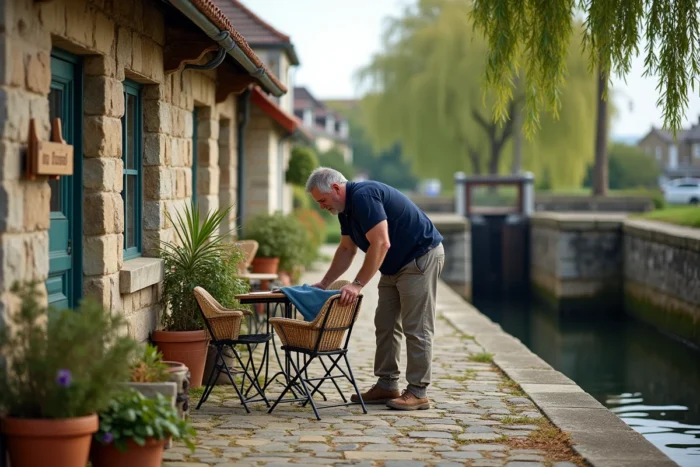
Economic Model of a Tourism Project in a Lock Keeper House: Compensating for Seasonality
Finistère is not immune to the seasonality of Breton tourism. Canal traffic peaks between April and October, with a high in July-August. A project relying solely on summer accommodation will struggle to cover its annual costs.
Project developers who succeed over the long term combine several sources of income:
- Unusual accommodation (gîte, guest room) operated during the high season, supplemented by short-term rentals during holidays and school breaks.
- Light catering or café-stop open to passing cyclists and boaters, which generates revenue even outside of overnight stays.
- Workshops, events, or group hosting (nature seminars, workshops) to animate the low season.
Diversifying activities remains the key to viability on a site where passing clientele disappears five months a year. Local authorities also assess the robustness of the economic model as a priority selection criterion in calls for projects.
Sustainable Tourism in Finistère: What Local Authorities Really Expect
Calls for projects are not simply looking to fill empty buildings. The Region expects candidates to propose an offer consistent with the territory’s “sustainable tourism” positioning. In practice, this translates into commitments regarding local sourcing, waste management, energy efficiency of the renovated building, and the enhancement of river heritage.
A file that only includes a financial business plan without an environmental or cultural dimension will fall behind a less profitable project that is better rooted locally. The alignment between the project and the territorial strategy weighs as heavily as financial solidity in the selection criteria.
Finistère, with its canals, greenways, and the rise of bike touring stays, offers a favorable environment for this type of project. The challenge is not finding a site, nor even financing it, but building an operating model that holds up over twelve months with a clientele concentrated over six.